Kedia Spiridon
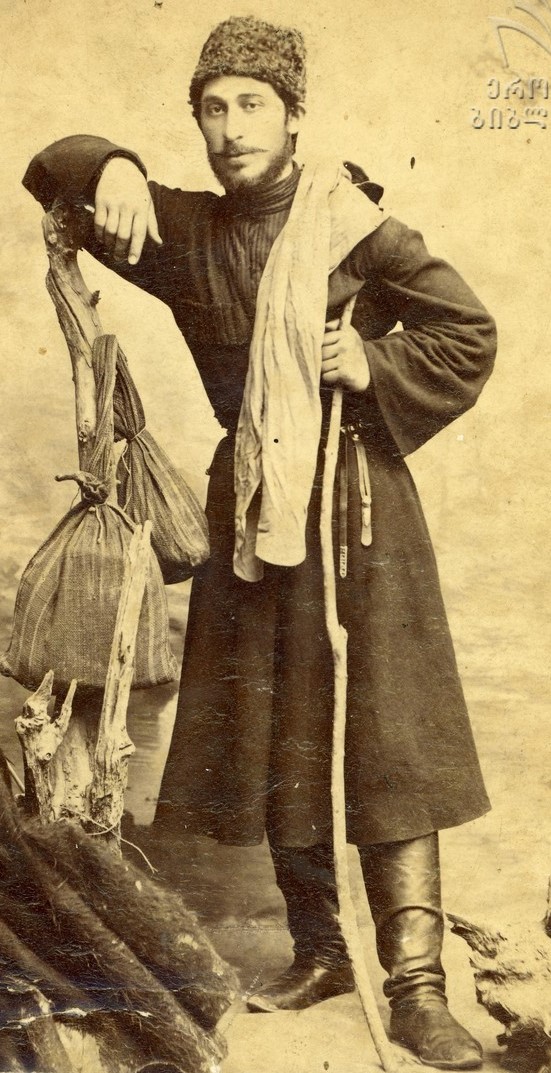
Spiridon Kedia (b. September 20, 1884, Zugdidi – d. May 17, 1948, Paris, buried in Leuville, France), public figure, politician, publicist, chairman of the National Democratic Party. He studied at the Kutaisi Classical Gymnasium. In 1905, he was expelled from the gymnasium for participating in strikes and political demonstrations. After returning to Zugdidi, he organized of peasant protests, for which a criminal case was initiated against him. Kedia temporarily moved to Svaneti, then to Circassia. In 1906, Kedia arrived in France and became a student at the Collège de France, and in 1907 he entered the Sorbonne University (major — natural sciences), also attended lectures at the University of Toulouse, and graduated from the University of Montpellier.
Due to the World War I, he decided to return to his homeland, but was imprisoned in Russia. He was released as a result of the efforts of members of the Georgian colony in St. Petersburg.
In 1914, Kedia arrived in Tbilisi. On May 24, 1915, under his leadership the newspaper “Sakartvelo” was launched on the base of the newspaper “Klde”. Kedia, along with other prominent figures, actively collaborated with the newspaper.
Kedia developed a plan to create a national-democratic political party in order to unite like-minded groups. In March 1917, an organizing committee was formed, and on June 4–10, he was elected chairman at the First Congress of the National Democrats. In 1917, Kedia traveled to Denmark and Sweden to meet with the “Committee for the Liberation of Georgia”. Upon his return, he actively participated in the activities of the National Council of Georgia.
In May 1918, Kedia participated in the Batumi Peace Conference and from there he was sent to Germany as the secretary of the official delegation of the independent Georgian state.
Kedia was a member of the Constituent Assembly of Georgia. He stood in opposition to the ruling (Social Democratic) party. He criticized its foreign and domestic policies, especially its relations with the peripheries. He was the leader of the opposition National Democratic faction.
After the annexation of Georgia by Bolshevik Russia in 1921, Kedia remained in Georgia. By February 1922, he participated in preparations of a large-scale protest demonstration, for which he was arrested. He was released only on the condition that he would leave the country. In 1923, Kedia arrived in France from Istanbul, where he continued his political activities. His goal was to “restore the integrity of Georgians in emigration”. In 1925, he founded the magazine “Samshoblostvis” (For the Homeland), and in 1932 — the newspaper “Sakartvelos Gushagi” (The Sentry of Georgia).
Kedia's family (wife – Sophio Chijavadze, daughter – Teo) were able to finally arrive in France only in 1928.
During World War II (1939–1945), Kedia participated in the activities of the Georgian National Committee created by Germany.
Source: სპირიდონ კედია. მასალები პირადი არქივიდან, თბ., 2007.
Literature: ჯანელიძე ო., სპირიდონ კედია. პოლიტიკური პორტრეტი, თბ., 2002.