Koridethi Gospels
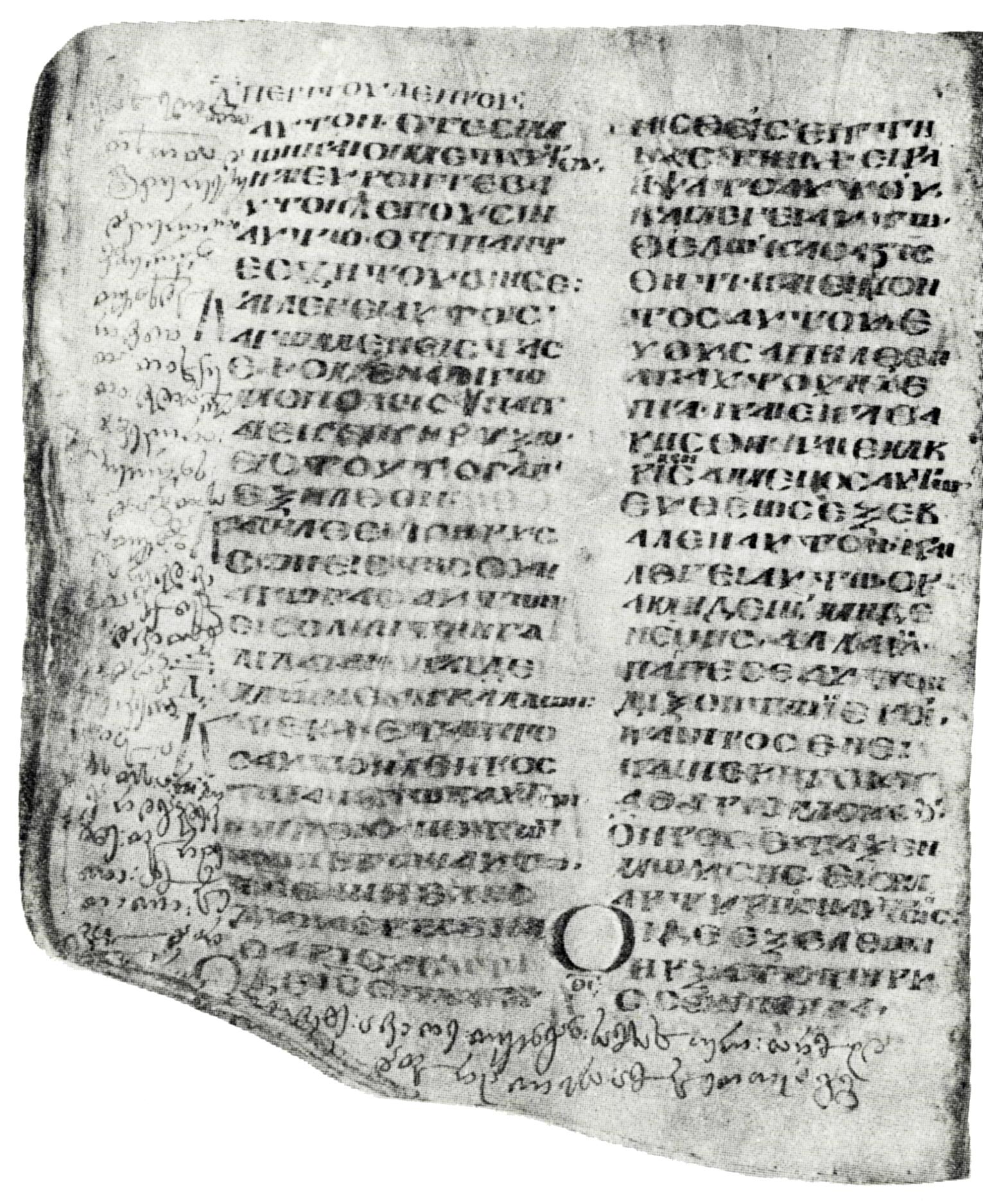
Koridethi Gospels is a Greek manuscript copied by a Georgian scribe in the 9th century. Its measurements are 290x240 mm and it is written in majuscule script on parchment, arranged in two columns. The manuscript comprises 249 folios; some are missing, and others are damaged. In the 11th century, an individual named Pitirion had the manuscript bound, and in the 12th century, it was re-adorned by the order of Beshken Opizari. Until the 15th century, the manuscript was kept in the Koridethi, in the Church of the Mother of God (until 1914, Koridethi was part of the Artvin region of the Batumi district; it is currently within the territory of Turkey).
Towards the end of the 15th century, the manuscript was moved from Koridethi to Upper Svaneti, specifically to the village of Kala and the Church of Saints Quiricus and Julitta, where it was discovered in 1853 by the ethnographer I. Bartolomei. In 1869, Count V. Levashov, the Governor of Kutaisi, took the manuscript from Svaneti to St. Petersburg in exchange of a deposit of 50 rubles. There, M. Brosset examined the manuscript and, in 1870, published an extensive article highlighting its significance.
Through the efforts of L. Dadeshkeliani and Bishop Gabriel (Kikodze), the manuscript was returned to Georgia and handed over to the Gelati Monastery. In 1901, Bishop Kirion (Giorgi Sadzaglishvili) brought the manuscript from Gelati to Tbilisi and transferred it to the Tbilisi Ecclesiastical Museum, where it was cataloged as No. 993. The manuscript was sent to Germany (Leipzig and Berlin) for study and publication through Pastor G. Berman, a German language teacher at the Tbilisi Gymnasium; it was returned to the Ecclesiastical Museum in 1904. Currently, the Koridethi Gospels are housed at the National Centre of Manuscripts, within the Greek manuscripts collection.
Koridethi manuscript was published in its entirety in Leipzig in 1913. Prior to that, in 1907, a portion of it, the Gospel of Mark, was published in phototype facsimile.
Koridethi Gospels are of great significance from a textual perspective; one section, specifically the Gospel of Mark, is considered to be close to the earliest Greek Gospel texts and is classified as belonging to the so-called Caesarean text-type. The manuscript is also remarkable from a paleographic and linguistic perspective. Numerous calligraphic features, as well as linguistic and orthographic irregularities found within it, bear the imprint of the Georgian script and language. The scientific interest in the manuscript is also determined by its historical significance: the Gospel text is accompanied by noteworthy Greek and Georgian marginalia. Many of these are historical records reflecting the social environment and way of life in Klarjeti, in particular Koridethi, and, in the case of later entries, in Svaneti.
G. Tsereteli and S. Kaukhchishvili made immense contributions to the study, dating, and publication of the Georgian and Greek marginalia found in the Gospels.
Literature: ბეზარაშვილი ქ., კორიდეთის ოთხთავის ისტორიისათვის, მრავალთავი, ფილოლოგიურ-ისტორიული ძიებანი, ტ. 24, თბ., 2015; სილოგავა ვ., კორიდეთის საბუთები (X–XIII სს.), თბ., 1989; ყაუხჩიშვილი ს., კორიდეთის ბერძნული სახარების ქართული მინაწერების დათარიღებისათვის, «ჩვენი მეცნიერება», 1924, №11–12; წერეთელი გ., კორიდეთის ხელნაწერი და მისი ბერძნული მინაწერები, ტფ., 1937; Beerman G., Gregory C. R., Die Koridethi Evangelien Θ38, Lpz, 1913; Brosset M., Note sur un manuscrit grec des quatre Εvangiles, rapporte de Suaneth-Libre et appartenant au comte Panin, Mélanges asiatiques tirés du Bulletin de l'Académie Impériale des Sciences de St.-Pétersbourg, VI (1870); https://pinakes.irht.cnrs.fr/notices/cote/63022/; https://www.csntm.org/2018/11/20/from-the-library-codex-koridethi/.
A. Urushadze
T. Otkhmezuri