Krutkov Yuri
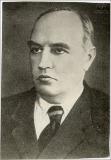
Krutkov, Yuri [b. May 19, 1890, Saint Petersburg – d. September 12, 1952, ibid.], physicist, Corresponding Member of the USSR Academy of Sciences (1933), Professor (1921), Doctor of Physical and Mathematical Sciences (1934). From 1918, he headed the development of theoretical physics in Russia. He founded the Institute of Roentgenology and Radiology. In 1922, he was elected Chairman of the Physics Division of the Russian Physico-Chemical Society. In 1922, on a Rockefeller Foundation fellowship, he went for research training to Germany and the Netherlands, where he established scientific ties with A. Einstein, H. A. Lorentz, P. Debye, and other scientists.
Krutkov made a decisive contribution to explaining Friedmann's results to Einstein and to the recognition of these results. From 1930, he headed the Department of Theoretical Mechanics at the Military-Mechanical Institute and worked in the Theoretical Physics Division of the Lebedev Physical Institute of the USSR Academy of Sciences (FIAN). In 1946–1947, at the newly established Sukhumi Institute of Physics and Technology, he researched problems of nuclear physics alongside German specialists (G. Hertz, M. von Ardenne, and others).
Krutkov's scientific works are devoted to issues of quantum theory, statistical mechanics, and the elasticity of solid bodies. In 1951, together with German scientists H. Barwich and G. Hertz, he was awarded the Stalin Prize for the study of uranium isotope separation and the stability and dynamics of gaseous diffusion cascades; he was the recipient of state awards.