Constantine I the Great
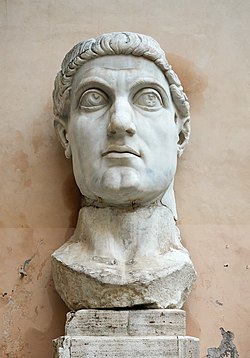
Constantine I the Great, Flavius Valerius Constantinus Magnus (b. February 27, 272/4, Naissus – d. May 22, 337, Nicomedia), Roman emperor from 306, son of Emperor Constantius Chlorus. After his father's death (July 25, 306), he was proclaimed Augustus by the legions while in Britain. He ruled Gaul. In 324, Constantine I deposed his son-in-law Licinius from the throne and became the sole ruler of the empire. In 330, he declared “New Rome” (which was soon named Constantinople after him) the capital of the empire. Constantine I supported the “Edict of Milan” (313) on the tolerance of Christians, built both pagan and Christian churches, was considered the highest priest (Pontifex Maximus). During the reign of Constantine I, the Roman Empire turned into a military-bureaucratic state, the condition of the cities improved. With the edict of 332, the attachment of colons (tenants) to the land began. He repelled barbarian attacks several times. Constantine I was a cautious and calculating politician. He died on the way to a campaign in Iran. Before his death, he converted to Christianity. He was buried in the Church of the Holy Apostles in Constantinople. The Christian Church considered Constantine I to be its benefactor from the very beginning and, as a sign of respect, did not destroy his statues.
In ancient Georgian sources (History of the Kings and Patriarchs of the Georgians, Conversion of Kartli, Vakhtang Gorgasali’s Life), Constantine I is mentioned with great respect. In these works, Constantine I and his mother – Helena of Constantinople – are named as the founders of the Kartli Church. According to the author of History of the Kings and Patriarchs of the Georgians, Constantine I “sent a great many priests and monks: he gave a great treasure to Bishop John and ordered: “Wherever you first find the place in Kartli, build churches in my name.” From him the Georgian Church received part of the cross on which Christ was crucified, planks on which the Lord's feet were fastened and the nails with which Christ's hands were nailed to the cross.
Source: ლეონტი მროველი, ცხოვრება ქართველთა მეფეთა, ქართლის ცხოვრება, ს. ყაუხჩიშვილის გამოც., ტ. 1, თბ., 1955.
Literature: სანიკიძე ლ., რომის იმპერია, ნაკვ. 2 (დომინატი), თბ., 1972; Федорова Е. В., Императорский Рим в лицах, М., 1979; Lexicon der Antike, Leipzig, 1985.
V. Goiladze