Tbilisi Funicular
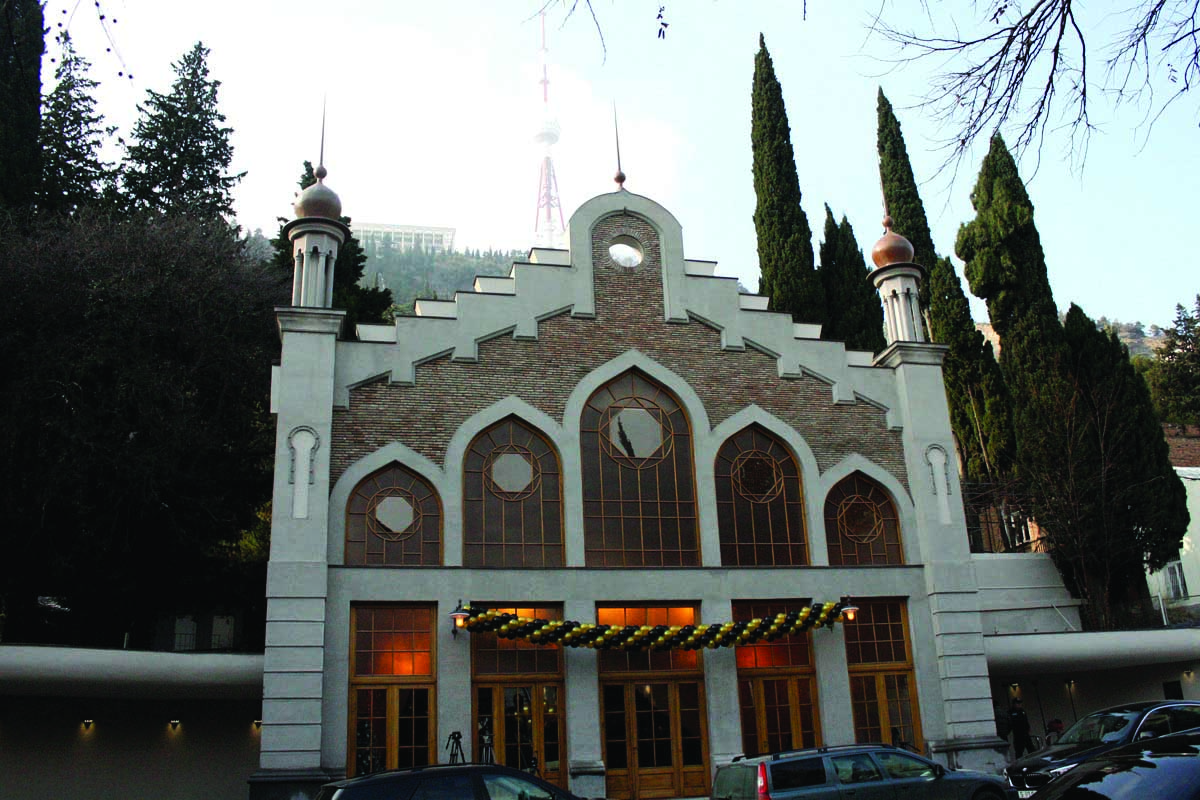
Tbilisi Funicular, a mountain-cable railway on Mtatsminda, a unique engineering and historical structure. It connects the city center with the Mtatsminda plateau. It is one of the oldest railways in the world, and was once distinguished by its main technical parameters, namely the length of the road and the slope of the track.
In July 1900, the city government signed an agreement on the construction of a funicular in Tbilisi and approved the project of the Belgian engineer A. Robb, who acted on behalf of the Belgian Anonymous Society. The agreement provided for the transfer of the funicular route to the self-government after the completion of construction. The Belgian Anonymous Society would operate the funicular for 45 years, and then it would be transferred to the city free of charge.
Construction began in September 1903 with the participation of foreign specialists, a new construction project was drawn up by the French engineer A. Blanche, and part of the architecture was developed by A. Szymkiewicz, Polish architect who worked in Tbilisi. The construction of the road was led by Belgian and Italian engineers. A significant contribution to the construction of the funicular was made by N. Nikoladze — on his initiative reinforced concrete works for the overpass were completed in a short time.
Tbilisi Funicular was opened on March 27, 1905. N. Pirosmanashvili dedicated a large painting to this event (1909), and the photographer D. Yermakov captured the shots of the old funicular on a photo.
On the Mtatsminda plateau, where the upper station of the funicular is located, a park of culture and recreation (now Mtatsminda Park) was built in the 1930s.
Since its launch, the Tbilisi Funicular has undergone several reconstruction and renovation works: the first reconstruction was carried out in 1936–1938 – a new three-story complex was built (architects: Z. Kurdiani and N. Kurdiani, co-author A. Volobuev); the second reconstruction was carried out in 1968–1969. This time, a new building was built instead of the old lower station (architects: G. Batiashvili, T. Kutateladze, the author of the facade stained glass – V. Kokiashvili); the carriages were replaced and the access area to the funicular was expanded.
On March 2, 2005, the Mtatsminda Funicular (tram) and cable car were transferred to the LLC “Links” (founder A. Patarkatsishvili) on a 49-year lease. In 2006–2007, the funicular was completely restored and reconstructed. In 2012, the Austrian company “Doppelmayr/Garaventa Group” (one of the world leaders in the construction of cable cars) rehabilitated the funicular, and also reconstructed the lower station, returning it to its original appearance (architects: M. Gujejiani, Z. Mamatelashvili).
Tbilisi Funicular is single-track, with a bypass intermediate station for cars. Capacity – 750 passengers/hour, in the middle of the road there is a platform, where the cars pass each other and some of the passengers (optionally) go to the Mtatsminda Pantheon. The difference in level between the upper and lower stations is 234 m.
Literature: ჩ ო რ გ ო ლ ა შ ვ ი ლ ი მ., მთაწმინდა, თბ., 1991.
M. Chorgolashvili
D. Pataraia