Cappadocia
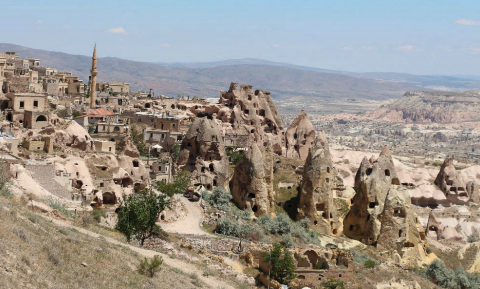
Cappadocia, a region in Asia Minor (currently within the territory of Turkey). The name originates from Old Persian (Katpatuka – land of beautiful horses). The border of Cappadocia extended to the West as far as the Halys River (now the Kizilirmak), to the North up to the Black Sea coast, to the South to the Taurus Mountains, and to the East to the Euphrates River. In ancient times (approx. 2nd millennium BC), Cappadocia was populated by Hattian (Proto-Hittite) tribes. At the very beginning of the 2nd millennium BC, Indo-European tribes (the Hittites) appeared in Cappadocia. Cappadocia became the core territory of the Hittite State. Their capital, Hattusa, was located here.
On the territory of Cappadocia, tribes of Kartvelian lineage lived along the southern coast of the Black Sea, in Pontic Cappadocia – the Laz and Chans [Tchans], and in Inner Cappadocia – the Mushki/Meskhians. From Pontic Cappadocia came Saint Nino, the Enlightener of the Georgians; As indicated in Georgian scholarly literature: "The tradition of the Georgian people regarded Cappadocia as a native land, and Cappadocian public figures as Georgians" (E. Khintibidze); "Cappadocia-Pontus-Colchis (Lazica)-Iberia was that unified ethnic realm which lived a unified cultural life" (G. Gozalishvili).
Major ecclesiastic centers were established on the territory of Cappadocia since ancient times. From the 1st century AD, Cappadocia was a hotbed for the spread of Christianity and became a site for the ascetic life of hermits. The construction of monasteries began from the time of Basil the Great (d. 379). Christians carved cells, churches, and monasteries out of tuff and basalt rocks. Today, Cappadocia represents a giant museum. In the Göreme (Gereme) Valley alone, there are up to 350 rock-cut churches (up to 500 in total), the walls of which are painted with scenes from the Old and New Testaments. Cappadocia is the homeland of the Cappadocian Holy Fathers (Basil the Great, Gregory of Nazianzus, and Gregory of Nyssa) well-known in the Christian world. Its religious center, Caesarea, enjoyed great influence in the Christian world.
Literature: ბახსოლიანი ნ., დიდი კაპადოკია ძვ. წ. I ათასწლეულის პირველ ნახევარში, თბ., 2008; გოზალიშვილი გ., ორი ეტიუდი პონტოსა და კაპადოკიის ცხოვრებიდან, თბ., 1965; გოილაძე ვ., ქართული ეკლესიის სათავეებთან, თბ., 1991; ხაზარაძე ნ., აღმოსავლეთ მცირე აზიის ეთნიკური და პოლიტიკური გაერთიანებები ძვ. წ. I ათასწლეულის პირველ ნახევარში, თბ., 1978; Дандамаев М. А., Каппадокия. Православная энциклопедия, т. 13, М., 2009.
V. Goiladze