Kress von Kressenstein Friedrich Sigmund Georg Freiherr
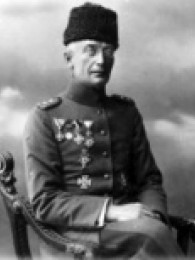
Kress von Kressenstein, (b. April 24, 1870, Nuremberg – d. January 16, 1948, Munich), German military figure and diplomat. General of Artillery (1928). Immediately upon the outbreak of World War I, he was sent to the Ottoman Empire on a special military mission. He served as a commander in the 8th Ottoman Army with the rank of Oberstleutnant [Lieutenant Colonel]. In 1916–1917, Kressenstein led defensive battles against the British on the Sinai Peninsula, at Gaza, and in Palestine. In May 1918, he was promoted to Major General. In 1918–1919, he headed the Imperial German diplomatic and military mission in the Caucasus (residing in Tbilisi). He facilitated the expansion of German influence in the Caucasus and the rapprochement of the Democratic Republic of Georgia with the German Empire. After the end of the war, Kressenstein returned to Germany and continued his service in the Bavarian military forces. In 1924, he received the rank of Lieutenant General.
At his first meeting with representatives of the Georgian government, Kressenstein stated: "We were brought to the ancient land of the Caucasus not only by military goals, but by the greatest desire to help the Georgian people restore their ancient statehood and independence." Regarding the opposition, which sought to change the existing political regime through the use of a foreign power, he advised:"the improvement of Georgia's domestic political situation was possible through evolution and not revolution." In a memorandum to his government, Kressenstein proposed: "So that the people see that Germany does not stand solely on the side of one ruling party and desires to assist the Georgian state as a whole, it would be desirable, like the leaders of the country, to decorate the leaders of the opposition with German orders as well."
Kressenstein held a negative view regarding the People's Guard, considering it the worst form of a revolutionary army. On the relations of the Georgian authorities with the Abkhazians, Kressenstein wrote: "The entire population of Abkhazia stood on the side of the Georgians; only certain large landowners appealed to Turkey for help." It is also noteworthy that, according to Kressenstein, before withdrawing its troops from Georgia, Germany handed over heavy weaponry and horses to the Georgians. In 1929, he retired. He wrote the memoirs My Mission to the Caucasus.
Literary works: ჩემი მისია კავკასიაში, გერმანულიდან თარგმნა, ისტორიული ნარკვევი და კომენტარები დაურთო ნ. მუშკუდიანმა, ქუთ., 2002.
Literature: საქართველოს დემოკრატიული რესპუბლიკა (1918–21), ენციკლოპედია-ლექსიკონი, თბ., 2018; ქართული დიპლომატიური ლექსიკონი, მთ. რედ. რ. მეტრეველი, ტ. 1, თბ., 1997; ჯანელიძე ო., საქართველოს დემოკრატიული რესპუბლიკის ისტორიის ნარკვევები, თბ., 2018.
L. Maniava