Tbilisi Botanical Garden
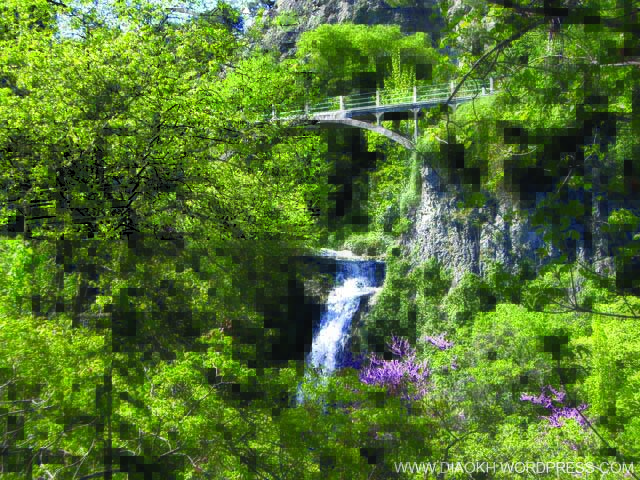
Tbilisi Botanical Garden [since July 22, 2011 – Non-entrepreneurial (Non-commercial) Legal Entity National Botanical Garden of Georgia], a scientific, educational, and nature conservation institution.
The Tbilisi Botanical Garden is situated in the southern part of the historical center of Tbilisi, within the Tsavkisistskali River gorge, at an elevation of 417–714 meters above sea level. It encompasses an area of 96 hectares. The institution has a long history: its predecessor was the Royal Garden of decorative and medicinal plants established in the lower section of the Tsavkisistskali gorge—Leghvtakhevi. The existence of this garden is documentarily attested from the beginning of the 17th century. It was granted the status of a Botanical Garden in 1845. From this period, the garden became a center for the botanical study of the Caucasus. Many prominent researchers of Caucasian flora worked here at various times. It was also here that the first Georgian botanists—Z. Kanchaveli, L. Kemularia-Natadze, L. Kanchaveli, N. Ketskhoveli, V. Menabde, L. Japaridze, et al.—starteted their scientific activities.
The primary directions of the garden's activities include: the study of Georgian plant diversity; the development of living collections of plants from various regions of the world, primarily the Caucasus; the elaboration of the scientific foundations for plant introduction and acclimatization; the bio-ecological study of plants for their introduction into cultivation and use in the urban landscaping of Eastern Georgia; floriculture and landscape design; the dissemination of botanical knowledge among the population; ex situ conservation of rare and endangered species of Caucasian and Georgian flora; the study of the reproductive biology of such plants; and the aesthetic and recreational significance of the garden.
The garden's collections are organized primarily on a phytogeographic basis. These include: endemic and rare species of Caucasian flora, medicinal plants of Georgia, Mediterranean plants (including a separate collection of evergreen sclerophyllous trees and shrubs), East Transcaucasian plants, and trees and shrubs from the Georgian open woodlands, Colchis, North America, China-Japan, and the Himalayas. The garden contains rich collections of decorative plants, including a rose garden (Rosarium) and a lilac garden (Syringarium). Many tropical and subtropical plants are cultivated in the garden's conservatory.
Fragments of vegetation characteristic of Eastern Georgia (riparian forest, open woodland, thorny shrubland, steppe, etc.) are preserved within the garden's territory. The institution maintains professional relations with various botanical establishments worldwide. Of particular note is its participation in the long-term Millennium Seed Bank project. Within the framework of this project, a Regional Caucasian Seed Bank has been established at the garden. A collection of scientific papers of the Tbilisi Botanical Garden has been published since 1876.
M. Tavartkiladze