Zarzma Monastery
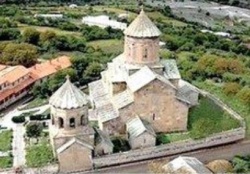
Zarzma Monastery is a monument of Georgian architecture, an ancient Georgian ecclesiastical and literary-educational center in Samtskhe. It is located in the village of Zarzma, Adigeni Municipality.
The monastery was established by the early feudal era cleric Serapion of Zarzma in the 9th century. The story of the construction work of Serapion and his subsequent abbots is well known thanks to the hagiographic work The Life of Serapion of Zarzma (10th century) by Basil of Zarzma. Serapion was greatly assisted by the local nobleman Giorgi Chorchaneli. Currently, the oldest historical monument in Zarzma is an inscription from the last decades of the 10th century, on the arch of the chapel entrance next to the bell tower, which tells the story of the campaigns of David III Curopalates against Bardas Skleros.
The current church and bell tower of Zarzma were built in the very beginning of the 14th century, during the reign of Beka I Jaqeli, the ruler of Samtskhe. The church is one of the most important monuments of that era, some new features characteristic of the architecture of that time are evident there. It was built with cobblestone, and the roof was also completely made of stone. Along the entire southern facade there is a three-arched gate in front of the church entrance, which is not similar to any other large church of that time in Zarzma. The types of carving and individual parts of the decoration are also different.
On the eastern facade, a huge carved cross placed above the main window occupies a central place. On the drum of the dome, every other window is fake. Such a thing, except for the Sapara and Zarzma monasteries, is not found in any other monument of any era. The walls of Zarzma are carved with various types of ornaments. A series of portraits of the Jaqeli family, as well as 16th-century historical figures are preserved on the walls of the church. The bell tower of the Zarzma monastery is one of the largest and oldest in Georgia.
The church, which was abandoned and surrounded by Muslim population in the 18th–19th centuries, gradually deteriorated. All of Zarzma's treasures – icons, crosses, other church items, and the most important relic – the icon of the Transfiguration of Zarzma – were moved to Guria, to a specially built new church named Zarzma in the village of Shemokmedi. Currently, all of Zarzma's surviving treasures are kept in the Shalva Amiranashvili Museum of Fine Arts in Tbilisi.
Literature: ბერიძე ვ., სამცხის ხუროთმოძღვრული ძეგლები, თბ., 1970; მენაბდე ლ., ძველი ქართული მწერლობის კერები, ტ. 1, ნაკვ. 2, თბ., 1962.
V. Beridze
L. Menabde