Zedazeni Monastery
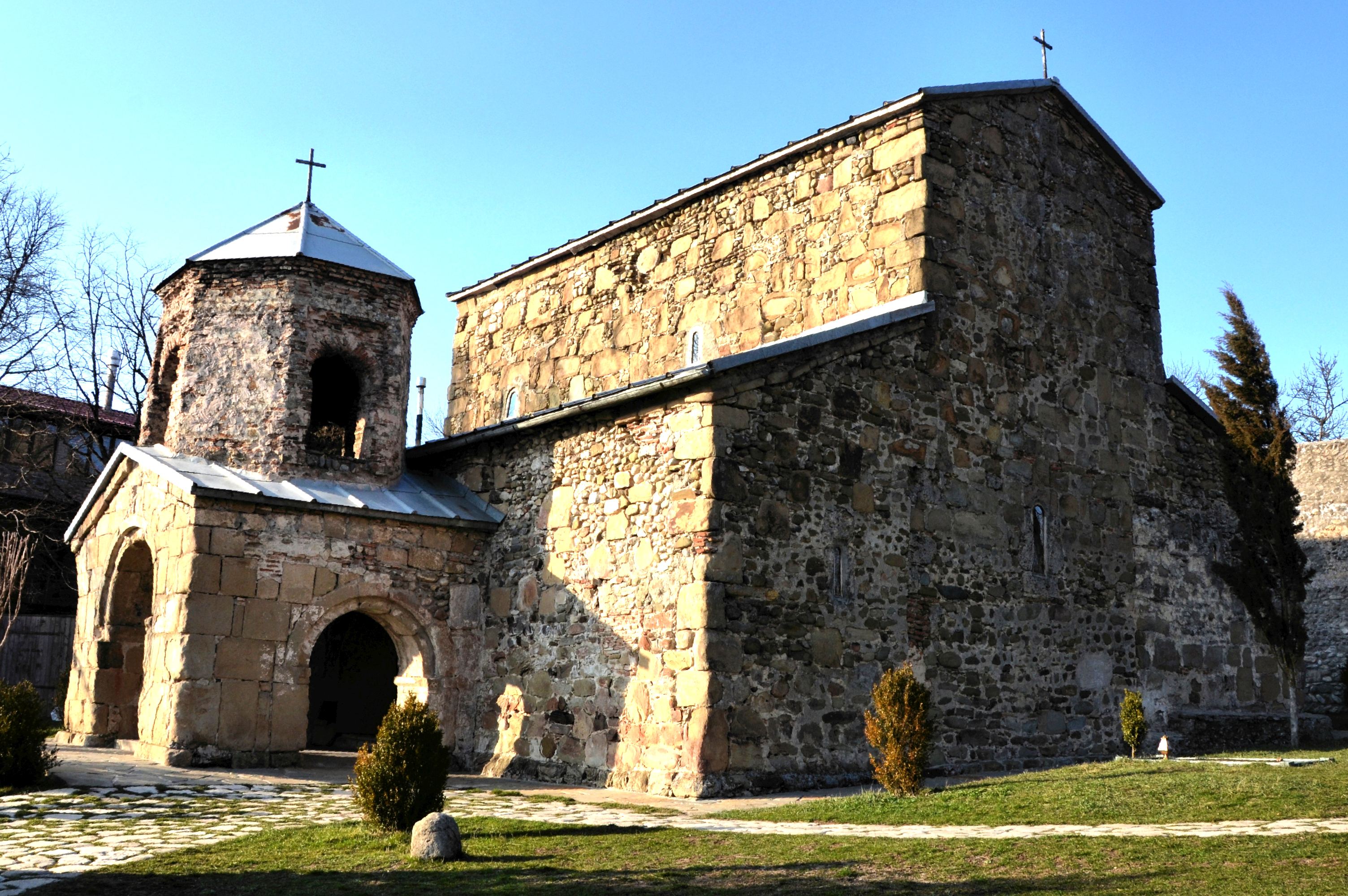
Zedazeni Monastery, monument of Georgian architecture and a monastic complex located northeast of Mtskheta, on the left bank of the Aragvi River. In the early era, a pagan idol of Zaden was erected here, but in the 540s, John, one of the Thirteen Assyrian Fathers, established a Georgian monastery in its place. Later, he became known as John of Zedazeni, and the monastery was called the Monastery of John of Zedazeni. Of the scribes working in the Zedazeni Monastery, only the abbot Michael (11th century) is known; on his initiative and based on the material he provided, an unknown author created a metaphrase edition of The Life of John of Zedazeni.
Among the monastic buildings that have survived to this day is the three-nave basilica of John the Baptist, built at the behest of Catholicos Clement at the end of the 8th century (the earlier small hall church is included in it). The monument is built of cobblestone and rubble stone, partly of brick, and some limestone. The facades are simple and plain. The windows on the eastern facade are asymmetrically arranged. On the facade of the main nave is a simple image of a cross. The church is adjoined from the south by a square gate with a cylindrical arch, on the roof of which stands an octagonal bell tower built of brick.
Zedazeni Monastery has been repaired several times; restoration works were carried out in 1970–1971.
L. Menabde
N. Andghuladze